
Nightstands with Power Strips: The Complete Charging Bedside Guide
Discover how built-in outlets, USB ports, and integrated power strips transform your bedside table into a convenient, clutter-free charging station.
SHOP RECOMMENDED PICKSWhy this matters: The average person charges two to three devices overnight. A nightstand with a built-in power strip eliminates the tangle of cables, frees up wall outlets, and keeps your phone, tablet, and wearable within arm's reach — all while you sleep.
Key Takeaways
- Nightstands with power strips combine bedside storage with integrated electrical outlets and USB ports.
- Built-in charging eliminates cable clutter and frees up wall sockets for lamps and other devices.
- Look for UL-listed or ETL-certified electrical components for safety and code compliance.
- USB-C Power Delivery (PD) ports are now standard on premium models, offering faster charging.
- Prices range from around $120 for basic models to $900+ for solid wood designer pieces with premium charging modules.
Recommended Nightstands with Power Strips
⚠️ AFFILIATE DISCLOSURE: This website contains affiliate links. As an affiliate Associate, we earn from qualifying purchases. If you make a purchase through these links, we may receive a small commission at no additional cost to you. Read our full affiliate policy.

Nightstand Edge Mount Power Strip with USB-C Ports Tabletop Surge Protector Desk Clamp Power Sockets with 3 AC Outlets &4 Fast Charging USB Ports for Home Office Hotel and Dormitory (Black(2-Pack))
Check price on Amazon
Anker Power Strip with 300J Surge Protector, 5ft Outlet Extender, 20W, 6AC | Flat Plug Extension Cord with Multiple Outlets, 2 USB C, 2 USB A, Dorm Room Essentials, Home Office, TUV Listed
Check price on Amazon
Travel Essentials, 22.5W/4.5A Flat Plug Power Strip, 6 Ft Extension Cord | 3 Outlets 4 USB Ports(2 USB C) Desktop Charging Station, Power Strip No Surge Protection for Cruise Ship, Dorm Room
Check price on Amazon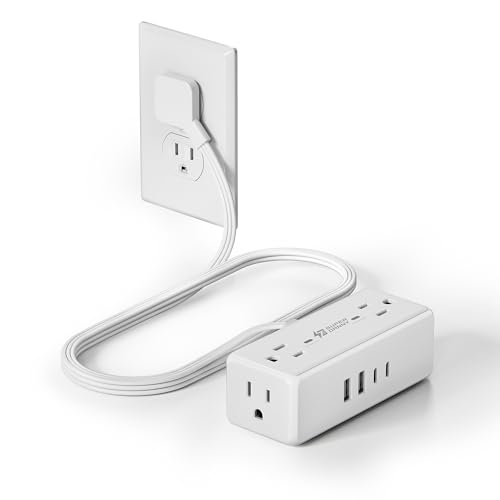
3Ft Short Extension Cord with Multiple Outlets, Surge Protector Power Strip | SUPERDANNY Small Flat Plug Power Strip with 4 Outlets & 4 USB, Charging Station for Home, Office, College Dorm Essentialss
Check price on Amazon
Mifaso PD30W Desk Clamp Power Strip, Surge Protector, Fast Charging Station | 4 Outlets, 4 USB (2 USB C), 5FT Extension Cord, Desk Organizer Gaming Accessories Office Essentials, Fits 1.96" Tabletop Edge
Check price on Amazon
FDTEK Power Strip USB C, 4 Outlets 3 USB Ports 5 FT Extension Cord Black | Space Saving Cube Shape Widely Spaced Outlets with USB C Port Flat Plug Power Strip for Travel Dorm Office Bedroom ETL Listed
Check price on Amazon
One Beat Power Strip with USB C, 3 Outlets 4 USB Ports (22.5W/4.5A), 6ft | Desktop Charging Station, Flat Plug, Braided Extension Cord, Non Surge Protector for Travel, Cruise Ship, ETL Listed
Check price on Amazon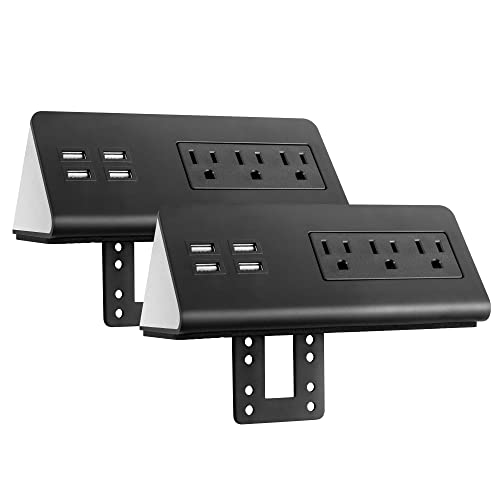
Emerising 2-Pack Desk Edge Mount Power Strips with 4 USB Ports & 3 AC Power Outlets for Home and Office Desktop Charging Bucket, 1250Joules Surge Protection,Black
Check price on AmazonWhat Is a Nightstand with a Power Strip?
A nightstand with a power strip is a bedside table that integrates electrical outlets directly into its frame — typically on the back panel, the top surface, or inside a drawer. Unlike a conventional nightstand where you plug a separate power strip into a wall outlet and hide it behind the furniture, these designs build the charging hardware into the piece itself. The result is a cleaner look, easier access, and a more intentional bedside setup.
Most models today combine two or three AC outlets with one or two USB ports. Higher-end versions add USB-C Power Delivery, wireless charging pads on the top surface, or even a small LED indicator so you can find the ports in the dark. If you are still deciding between a charging-equipped piece and a standard design, our guide to dresser with charging station options explains how the same technology scales up to larger bedroom furniture.
Why Buy a Charging Nightstand Instead of a Regular One?
There are four practical reasons buyers choose integrated power over a traditional bedside table:
- Cable management. When the outlet is part of the furniture, cords stay short and contained. A dedicated bedside table cable management strategy becomes far simpler because you are not routing cables across the floor or behind the bed.
- Outlet availability. Most bedrooms have only one or two wall outlets near the bed. A built-in strip lets you charge a phone, a watch, and a lamp from a single plug.
- Convenience. Reaching for a port on the nightstand surface is easier than fumbling behind the furniture for a wall socket.
- Aesthetics. No visible power strip, no dangling cables, no adapter bricks on the floor. The charging hardware disappears into the design.
For readers furnishing an entire bedroom, the same logic applies to matching sets. Our article on matching nightstand and dresser combinations covers how to coordinate charging features across a full bedroom suite.
Types of Power and Charging Features
Not all charging nightstands are built the same. The electrical specification is the single most important factor in your purchase decision, so it pays to understand what each feature actually delivers.
AC Outlets (Standard Wall Sockets)
Two or three grounded AC outlets are the baseline. These accept standard plugs, so you can power a lamp, a laptop charger, or a CPAP machine directly from the nightstand. Check the amperage rating — most integrated strips handle 15 amps, which is sufficient for typical bedroom electronics. Look for outlets positioned on the back or side rather than the top, so a spilled glass of water cannot reach them.
USB-A Ports
USB-A is the older, rectangular connector still used by many phones, e-readers, and accessories. Typical output is 2.4 amps per port, which charges a smartphone in a few hours but is slow for tablets. USB-A is fine as a secondary port but should not be your only charging option in a new purchase.
USB-C with Power Delivery (PD)
USB-C PD is the current standard. A 20W PD port charges an iPhone to 50% in roughly 30 minutes; 45W or 65W PD ports can charge laptops. If you are buying a charging nightstand today, at least one USB-C PD port is strongly recommended. This is the feature most likely to remain useful for the next five to seven years.
Wireless Charging Pads
Some premium models embed a Qi wireless charging pad into the top surface. You set your phone down and it charges without a cable. The trade-off is placement: the phone must sit precisely on the pad, and a thick case can block charging. Wireless pads work best as a supplement to USB-C, not a replacement.
How to Choose the Right Charging Nightstand
Work through these five criteria before you buy.
1. Electrical Safety Certification
This is non-negotiable. The charging module should carry a UL, ETL, or CSA listing mark. These certifications confirm the wiring, insulation, and grounding meet recognized safety standards. Unlisted electrical components in furniture are a genuine fire risk and may void your home insurance. If a product page does not mention certification, treat that as a red flag.
2. Port Configuration
Count your devices and match the ports. A typical setup — phone, smartwatch, tablet, and a lamp — needs two AC outlets and two USB ports, at least one of which should be USB-C PD. If you charge a laptop at the bedside, look for a 45W or higher USB-C PD port. Avoid models with only USB-A if you plan to keep the nightstand for years.
3. Placement of Outlets
Outlets on the back panel keep the top surface clean but are harder to reach. Outlets on the side or front edge are more accessible. Outlets on the top surface are the most convenient but require a recessed, water-resistant design. Think about how you actually use the nightstand before choosing.
4. Size and Height
A charging nightstand must still fit your bed and your room. The top of the nightstand should sit level with or slightly below the top of your mattress. If you are unsure whether a taller unit works, our article on whether a nightstand can be higher than the bed walks through the ergonomics. For narrow spaces, a narrow nightstand with storage that includes a power strip solves both the space and charging problems at once.
5. Style and Material Match
The charging hardware should not dictate the look of your bedroom. Charging nightstands come in the same range of styles as conventional ones — walnut, oak, white, black, rattan, and upholstered finishes. If your bedroom leans modern, a Scandinavian style nightstand with integrated power keeps the aesthetic clean. If you prefer a warmer, traditional look, a walnut nightstand with drawers can hide the charging module behind a drawer face.
Comparison: Power Strip vs. Standard Nightstand
| Feature | Nightstand with Power Strip | Standard Nightstand |
|---|---|---|
| Built-in AC outlets | Yes (typically 2–3) | No |
| USB charging ports | Yes (USB-A and/or USB-C PD) | No |
| Cable clutter | Minimal | Requires external power strip |
| Wall outlet usage | One plug powers everything | Multiple devices compete for outlets |
| Typical price | $120–$900+ | $80–$700 |
| Safety certification needed | Yes (UL/ETL/CSA) | Not applicable |
Safety Considerations You Should Not Ignore
Anything that combines furniture with mains electricity deserves scrutiny. Keep these points in mind:
- Never exceed the amperage rating. If the integrated strip is rated for 15 amps, do not daisy-chain a space heater, a hair dryer, and a laptop charger onto it simultaneously.
- Keep liquids away from top-mounted outlets. A recessed outlet with a cover is safer than a flush one on the top surface.
- Check the cord length. The nightstand's power cord must reach your wall outlet without an extension cord. Extension cords used permanently are a tripping and overheating hazard.
- Inspect for damage. If the cord or outlet face shows cracks, discoloration, or a burning smell, stop using the nightstand immediately.
- Grounding matters. Plug into a properly grounded three-prong wall outlet. Do not use a cheater plug to bypass the ground.
If you are building a fully integrated bedside setup, pairing a charging nightstand with a hardwired lighting solution reduces the number of cords even further. Our guide to wall-mounted nightstand lights covers how to eliminate the lamp cord entirely.
Charging Nightstands for Different Rooms and Users
The right charging nightstand depends on who uses it and where it sits.
Primary Bedroom
For a master bedroom, prioritize USB-C PD and enough AC outlets for two people. A nightstand set of 2 with drawers gives each sleeper their own charging station and storage. If the room is tight, a corner nightstand with drawers can fit into an awkward angle while still offering power.
Guest Room
Guests arrive with unfamiliar chargers and adapters. A nightstand with both USB-A and USB-C ports, plus two AC outlets, covers almost every device. A fully assembled bedside table with built-in power is a low-effort upgrade that guests notice.
Children's Room
For kids, safety features matter more than port count. Choose a unit with covered or recessed outlets, a short cord, and no exposed wiring. A white children's bedside table with a single USB port is often enough for a tablet or night light.
Home Office or Guest Bedroom
If the room doubles as a workspace, a charging nightstand that can power a laptop is valuable. Look for a 45W+ USB-C PD port, or consider a side table with drawer for office use that includes power. The same principle applies to living room furniture — a couch side table with outlet solves the same charging problem in a different room.
Installation and Setup Tips
Setting up a charging nightstand is straightforward, but a few details make a difference:
- Measure the distance to your wall outlet before the nightstand arrives. If the included cord is too short, return the unit rather than adding an extension cord.
- Leave ventilation space behind the nightstand. Charging modules generate a small amount of heat; do not push the unit flush against the wall if the manufacturer specifies a gap.
- Use the right cables. A USB-C PD port only delivers full speed with a cable rated for the same wattage. A cheap cable will throttle charging.
- Route cords through built-in grommets if the nightstand has them. This keeps cables from pinching when drawers open and close.
- Test all ports on arrival. Plug a device into each outlet and USB port during the return window. Electrical faults are rare but real.
Maintenance and Longevity
A charging nightstand has two systems to maintain: the furniture and the electronics. For the furniture surface, standard care applies — dust regularly and clean spills promptly. Our nightstand surface cleaning guide covers wood, laminate, and painted finishes. For the electronics:
- Unplug the nightstand before cleaning around the outlets.
- Do not spray liquid cleaner directly onto the outlet face. Spray the cloth, then wipe.
- Check the cord and plug every few months for wear.
- If a port becomes loose or stops delivering power, stop using it and contact the manufacturer. Do not attempt to repair an integrated electrical module yourself.
Frequently Asked Questions
Are nightstands with power strips safe?
Yes, when the electrical components carry a UL, ETL, or CSA certification and you stay within the amperage rating. Avoid uncertified imports and never overload the strip with high-wattage appliances.
Can I add a power strip to an existing nightstand?
You can, but a surface-mounted strip or a clamp-on outlet is a less clean solution than an integrated one. If you are buying new furniture anyway, an integrated model is worth the modest price premium.
What is the difference between USB-A and USB-C on a nightstand?
USB-A is the older rectangular port with slower charging. USB-C is reversible, supports Power Delivery, and can charge laptops as well as phones. For a new purchase, prioritize USB-C PD.
Do charging nightstands work in older homes with two-prong outlets?
They require a grounded three-prong outlet for safe operation. If your bedroom only has two-prong outlets, have an electrician install a grounded outlet before using a charging nightstand. Do not use a grounding adapter as a permanent solution.
How much should I expect to pay for a nightstand with a power strip?
Expect around $120 to $300 for basic models with two AC outlets and USB-A ports. Mid-range units with USB-C PD cost $300 to $600. Solid wood and designer pieces with premium charging modules range from $600 to $900+.
Can a charging nightstand charge a laptop?
Only if it has a USB-C PD port rated at 45W or higher. Standard USB-A ports and low-wattage USB-C ports will charge a laptop very slowly or not at all.
Final Thoughts
A nightstand with a power strip is a small upgrade that changes your daily routine. Instead of hunting for a wall outlet or untangling a power strip behind the bed, you plug in, set your phone down, and sleep. The key is to buy for safety first, then for port configuration, then for style. Get those three right and the nightstand will serve you for years.
If you are still exploring bedside options, our broader nightstands with power strips collection covers the full range of styles and price points. For rooms where wall space is limited, a small wall table with an outlet can serve the same charging function in a tighter footprint.