
Two Drawer Nightstands: The Complete Buying Guide
Everything you need to know before choosing a two-drawer bedside table. Compare storage capacity, dimensions, materials, and the best options available today.
SEE TOP PICKSWhy two-drawer nightstands are the most popular choice: They offer the perfect balance between storage capacity and footprint. One drawer for essentials you reach for daily—reading glasses, medication, a book—and a second drawer for items you want tucked away but accessible. Unlike single-drawer models, they prevent clutter from spilling over. Unlike three-drawer units, they don't dominate small bedrooms. For most people, two drawers is the sweet spot.
What to Look For in a Two-Drawer Nightstand
Before browsing products, understand the key factors that separate a nightstand you'll love from one you'll tolerate. These considerations will help you filter options quickly and confidently.
Drawer depth and interior dimensions matter more than exterior size. A nightstand measuring 24 inches wide might have drawers only 14 inches deep internally. Always check interior measurements if you plan to store books, tablets, or larger items. Standard two-drawer nightstands typically offer 4–6 inches of drawer height each—enough for paperback books, journals, and charging cables, but not for bulky items like large hardcovers or CPAP machines.
Drawer glides determine long-term satisfaction. Metal ball-bearing glides with soft-close mechanisms prevent slamming and last for years. Budget models often use nylon or plastic rollers that wear out quickly and become noisy. If you're investing in a nightstand you'll keep for a decade, prioritize quality hardware. Our soft-close drawer guide explains what to look for.
Height should align with your mattress top. The ideal nightstand height is within 2 inches of your mattress surface—typically 24–28 inches for most beds. A nightstand that's too low forces you to reach down; too high and you'll knock things over in the dark. If you have an adjustable bed or a thicker mattress, measure carefully. Our nightstand dimension chart provides standard sizing references.
Material affects durability, weight, and style. Solid wood nightstands (oak, walnut, pine) last decades but cost more and weigh significantly more. Engineered wood with veneer offers a middle ground—lighter, more affordable, and often indistinguishable from solid wood at a glance. Metal nightstands suit industrial and modern aesthetics. For a deeper dive, see our material and finish hub.
Consider the footprint relative to your bed and walls. Two-drawer nightstands typically measure 18–24 inches wide. In small bedrooms, a 20-inch wide unit with two drawers maximizes storage without crowding. For tight spaces, a small round nightstand or a tall bedside table with drawers can work better than a wide, low unit. If floor space is extremely limited, consider a floating or wall-mounted design.
Two Drawers vs. Other Configurations
Understanding the trade-offs helps you decide if two drawers is truly the right choice for your bedroom.
vs. Single drawer: A single drawer forces you to choose between accessibility and concealment. Two drawers let you separate "daily use" items from "occasional use" items. The cost difference is usually modest—often $30–$80 more for the second drawer.
vs. Three drawers: Three-drawer nightstands offer more storage but are taller and bulkier. They suit larger bedrooms or people who genuinely need the extra space. For most, the third drawer becomes a junk drawer. If you're considering three drawers, ask yourself honestly: will you use it, or just fill it?
vs. Open shelf designs: Open shelves provide quick access and display space but collect dust and look cluttered. A two-drawer nightstand with a single open shelf (a common hybrid) gives you the best of both—concealed storage below, display space above. Our open vs closed storage guide explores this trade-off in detail.
vs. Floating nightstands: Floating or wall-mounted nightstands save floor space and create a minimalist look, but installation requires drilling into walls and ensuring proper anchoring. If you rent or move frequently, a freestanding two-drawer nightstand is more practical. For those who own their home, a floating nightstand with two drawers combines style with function.
Sizing and Placement Guidelines
Getting the size right prevents returns and frustration. Here's what to measure before you buy.
Width: A two-drawer nightstand typically ranges from 18 to 28 inches wide. For a king or queen bed, 22–26 inches wide looks proportional. For twin or full beds, 18–22 inches is sufficient. Leave at least 2–3 inches between the nightstand and the wall or other furniture to avoid a cramped appearance.
Depth: Standard depth is 15–20 inches. Deeper nightstands (20+ inches) provide more surface area for lamps and decor but protrude further into the room. In narrow bedrooms, a shallower depth (14–16 inches) keeps traffic flow open. Our traffic flow design guide explains how to plan bedroom layouts.
Height: As mentioned, match your mattress height within 2 inches. Standard bed heights are 24–28 inches. If you have a platform bed (lower mattress), choose a lower nightstand. If you have a pillow-top mattress or adjustable base, you may need a taller unit. A tall bedside table with drawers can work if your mattress sits high.
Placement: Center the nightstand relative to your bed's headboard if possible. If the bed is against a wall on one side, you may only have room for one nightstand—consider a queen bed frame with nightstand as a combined solution. For symmetrical bedrooms, two matching nightstands create visual balance. Our nightstand placement guide covers spacing and symmetry in detail.
How to Style a Two-Drawer Nightstand
A two-drawer nightstand offers a generous surface for styling without becoming cluttered. Here's a simple formula that works across styles.
Layer height and texture. Start with a lamp as the tallest element (16–24 inches tall). Add a small stack of books or a decorative box at medium height. Finish with a small tray or catchall for keys, glasses, and jewelry. This creates a visual triangle that feels intentional. For lamp options, see our bedside table lamps guide.
Keep the top surface 70% clear. The point of two drawers is to conceal clutter—don't undermine it by piling everything on top. Use the drawers for essentials and keep the surface for a lamp, a book, and one or two decorative objects. Our what to put on a nightstand guide offers item-by-item recommendations.
Coordinate with your bedroom's color palette. A wood nightstand adds warmth; a white or painted nightstand feels airy and modern; a metal nightstand introduces an industrial edge. If your bedroom is neutral, a white bedside table with drawers blends seamlessly. For a bolder look, consider a brass nightstand or a sculptural nightstand.
Consider the drawers themselves. Drawer fronts with detail—recessed panels, integrated handles, or contrasting wood tones—add visual interest without clutter. If you prefer a minimalist look, handleless drawers with push-to-open mechanisms keep the profile clean.
Recommended Two Drawer Nightstands
⚠️ AFFILIATE DISCLOSURE: This website contains affiliate links. As an affiliate Associate, we earn from qualifying purchases. If you make a purchase through these links, we may receive a small commission at no additional cost to you. Read our full affiliate policy.

Lazzanto Nightstand with Rear Charging Station, LED Light, 2 Drawers, Black | Industrial Nightstand, 2 USB-A Ports & AC Outlets, Raised Back Guard, Fabric Storage Drawers, Bedside Table for Bedroom, Dorm
Check price on Amazon
Furologee Night Stand with Charging Station, 2 Fabric Drawers, White | Night Stand with USB & Outlets, Side Table with Storage & Hooks, Industrial End Table for Living Room/Bedroom
Check price on Amazon
VASAGLE Farmhouse Nightstand with Charging Station, Drawer, Set of 2 | Bedside Table, Side Table with Open Compartment, for Bedroom, Set of 2, Rustic White, LIRY Collection ULET859WJ73S
Check price on Amazon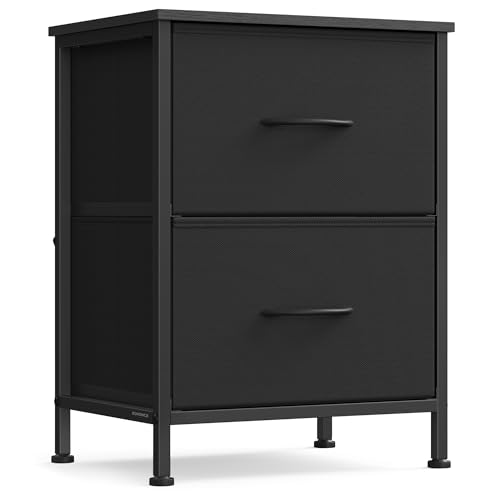
SONGMICS Nightstand with 2 Fabric Drawers, Bedside Table, Side End Table | Small Dresser for Bedroom, Modern, Ink Black and Ebony Black, BELLAH Collection ULGS312B01S
Check price on Amazon
SONGMICS Nightstand with 2 Fabric Drawers, Bedside Table, Side End Table | Set of 2 Small Dresser for Bedroom, Modern basic, Ink Black, BELLAH Collection ULGS112BH02S
Check price on Amazon
WLIVE Night Stand, Small Dresser with 2 Drawers & Wooden Top, Nightstand with Fabric Bins, Bedside Table End Table for Bedroom, Closet, Entryway, College Dorm, Rustic Brown
Check price on Amazon
WLIVE Nightstand, 2 Drawer Dresser for Bedroom, Small Dresser with 2 Drawers, Bedside Furniture, Night Stand, End Table with Fabric Bins for Bedroom, Closet, Entryway, College Dorm, Dark Grey
Check price on Amazon
LOAKEKEL Night Stand, Nightstands Set of 2 with Charging Station | Bed Side Table with 2 Fabric Drawers for Bedroom, End Tables with Storage Shelf for Small Spaces, Rustic Brown
Check price on AmazonMaterials and Durability: What to Expect
The material you choose affects how long your nightstand lasts, how much it weighs, and how it ages.
Solid wood: Oak, walnut, maple, and pine are the most common. Solid wood nightstands can last 20+ years with minimal care. They're heavier (30–50 lbs for a two-drawer unit) and more expensive ($200–$800+). They can be sanded and refinished if damaged. Our oak nightstand guide and walnut nightstand guide cover specific species.
Engineered wood (MDF, particleboard with veneer): More affordable ($80–$300), lighter, and available in a wide range of finishes. Quality varies dramatically—cheap particleboard swells if exposed to moisture; high-quality MDF with thick veneer can last 10+ years. Check the weight capacity and warranty. Our engineered wood nightstands guide explains what to look for.
Metal: Iron, steel, and aluminum nightstands are durable, easy to clean, and suit industrial, modern, and minimalist bedrooms. They're typically lighter than wood but can scratch floors without felt pads. Our iron nightstands and aluminum nightstands guides cover options.
Mixed materials: Many two-drawer nightstands combine wood with metal legs, marble tops, or rattan drawer fronts. These hybrid designs offer visual interest and can be surprisingly affordable. A white nightstand with wooden top or a rattan nightstand adds texture without overwhelming the space.
Caring for Your Two-Drawer Nightstand
A few simple habits keep your nightstand looking new for years.
Dust weekly. Use a microfiber cloth or a damp cloth for wood surfaces. Avoid silicone-based polishes that leave residue. For detailed surface care, see our nightstand surface cleaning guide.
Address spills immediately. Liquids can stain wood, warp engineered wood, and leave water rings. Blot—don't rub—and dry thoroughly. Our liquid spill cleanup guide covers specific spill types.
Keep drawers organized. Overloading drawers strains glides and causes sagging. Use drawer dividers or small organizer inserts to keep items from sliding around. Our nightstand organizer inserts guide offers solutions.
Protect the surface. Use coasters for drinks, felt pads under lamps, and a small tray for keys and jewelry. This prevents scratches and water rings. For more, see our nightstand coasters guide.
Check hardware periodically. Tighten screws on drawer pulls and glides every few months. If a drawer starts sticking, lubricate the glides with a silicone spray (not oil, which attracts dust). Our nightstand drawer repair guide covers common fixes.
What to Expect at Different Price Points
Two-drawer nightstands range from budget-friendly to investment pieces. Here's a realistic breakdown.
Under $100: Expect engineered wood or metal with basic glides. These are functional but may not last more than 3–5 years with daily use. Best for guest rooms, rentals, or temporary setups.
$100–$250: The sweet spot for most buyers. You'll find quality engineered wood with veneer, solid wood options (pine, rubberwood), and mixed-material designs. Drawer glides are usually metal with decent smoothness. This range offers the best balance of price, durability, and style.
$250–$500: Solid wood nightstands (oak, walnut, maple), designer brands, and premium hardware (soft-close glides, dovetail joints). These are investment pieces meant to last 10–20 years.
$500+: Handcrafted, artisan, or designer nightstands. Custom sizes, exotic woods, and heirloom-quality construction. For most buyers, the $150–$350 range offers everything you need without diminishing returns.
Common Mistakes to Avoid
Learning from others' mistakes saves time, money, and returns.
Buying without measuring. The most common mistake. Measure your mattress height, available width, and clearance to walls before ordering. A nightstand that's 2 inches too tall or too wide is a daily annoyance.
Ignoring drawer interior dimensions. Exterior dimensions don't tell the full story. A 24-inch wide nightstand might have 14-inch deep drawers—too short for a standard tablet or hardcover book. Check interior specs if storage capacity matters.
Choosing style over function. A beautiful nightstand with sticky drawers or a wobbly frame will frustrate you daily. Prioritize function first, then style. Our nightstand buying mistakes guide covers more pitfalls.
Overlooking assembly requirements. Some nightstands ship fully assembled; others require 30–60 minutes of assembly. Check before buying, especially if you lack tools or mobility. Our nightstand assembly guide helps.
Neglecting safety. If you have children or pets, anchor your nightstand to the wall with anti-tip straps. Drawers can be climbed, and a tipping nightstand is a serious hazard. Our nightstand anti-tip straps guide explains installation.
Final Thoughts: Choosing Your Two-Drawer Nightstand
A two-drawer nightstand is the most versatile bedside storage solution for most people. It provides enough space to keep essentials organized without the bulk of a three-drawer unit or the limitations of a single drawer.
Before you buy, confirm three things: height (within 2 inches of your mattress), width (proportional to your bed and room), and drawer quality (metal glides, smooth operation). If you get these right, the style and material become personal preference—and you'll have a nightstand that serves you well for years.
For related reading, explore our guides on nightstand types, shopping and reviews, and style and design. If you're still deciding between configurations, our open vs closed storage comparison can help.