
Floating vs Standing Nightstand: Which Is Right for Your Bedroom?
Compare wall-mounted and freestanding bedside tables. Discover the pros, cons, installation, stability, and style differences to make the best choice for your space.
SEE THE COMPARISONRecommended Floating & Standing Nightstands
⚠️ AFFILIATE DISCLOSURE: This website contains affiliate links. As an affiliate Associate, we earn from qualifying purchases. If you make a purchase through these links, we may receive a small commission at no additional cost to you. Read our full affiliate policy.

Bamboo Floating Wall Mounted Nightstand Wall Storage Shelf (2, White) | Solid Bamboo Floating Shelf,Multipurpose Storage Use,Sturdy Floating Support,Bedside Tables for Bedroom, Living Room
Check price on Amazon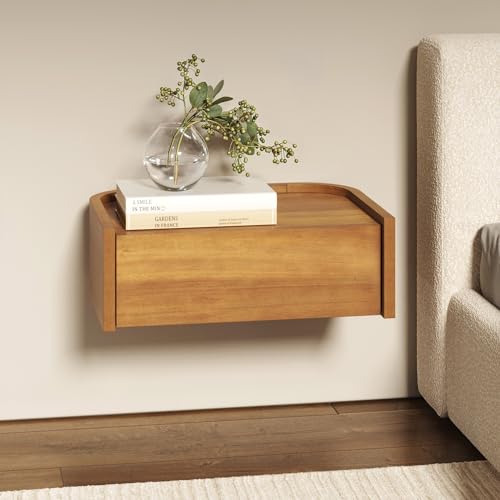
Nathan James Tyla Wall Mounted Bedside Table, Floating 1-Drawer Nightstand with Rounded Edges, Light Brown
Check price on Amazon
HedoAjim White Modern Floating Wall Mounted Nightstand with Drawer Storage Wood Bedside Table Small Wall Shelf for Bedroom Living Room
Check price on AmazonWhat Is a Floating Nightstand?
A floating nightstand (also called a wall-mounted nightstand) is attached directly to the wall, with no legs touching the floor. It creates a clean, minimalist look and frees up floor space, making it a popular choice for small bedrooms and modern interiors. Floating nightstands are often installed at a height that aligns with the top of the mattress for easy reach. If you're short on space, you might also consider a small floating nightstand with drawer for compact storage.
Installation typically requires anchoring into wall studs or using heavy-duty wall anchors. Some models include hidden mounting brackets, while others are designed as floating shelves with drawers. Because they don't touch the floor, floating nightstands can make a room feel larger and less cluttered. However, they do have weight limits and require careful installation.
What Is a Standing Nightstand?
A standing nightstand (also known as a freestanding bedside table) rests on the floor with legs or a solid base. It's the traditional choice for most bedrooms and offers maximum flexibility—you can move it anytime without tools. Standing nightstands come in countless styles, from mid-century modern nightstands with drawers to dark wood bedside tables with drawers.
Because they sit on the floor, standing nightstands can support more weight and often provide more storage space. They're also easier to install—just place them beside your bed. The main trade-off is that they occupy floor space, which can be a drawback in tight rooms. If you need a narrow option, explore our guide to thin bedside tables.
Floating vs Standing Nightstand: Side-by-Side Comparison
| Feature | Floating Nightstand | Standing Nightstand |
|---|---|---|
| Installation | Requires wall mounting, studs or anchors; tools needed | No installation; place on floor instantly |
| Floor Space | Saves floor space; ideal for small rooms | Occupies floor space; can feel bulky in tight areas |
| Stability & Weight Limit | Depends on wall anchoring; lower weight capacity | Very stable; supports heavier items |
| Storage Capacity | Usually limited; drawers or shelves are compact | Can be larger with multiple drawers and shelves |
| Style & Aesthetic | Modern, minimalist, airy | Traditional, versatile, grounded |
| Cleaning | Easy to clean under; no floor contact | Requires moving to clean underneath |
| Cost | Typically $50–$400+ (depending on material and design) | Typically $40–$600+ (wide range of styles) |
| Best For | Small bedrooms, modern interiors, rental-friendly with proper anchors | Traditional bedrooms, heavy storage needs, flexibility |
Pros and Cons at a Glance
Floating Nightstand Pros
- Saves floor space and makes rooms feel larger
- Modern, sleek aesthetic
- Easy to clean underneath
- Adjustable height during installation
- Great for small bedrooms and studios
Floating Nightstand Cons
- Requires drilling into walls
- Limited weight capacity
- Less storage space
- Difficult to relocate
Standing Nightstand Pros
- No installation required
- Very stable and sturdy
- More storage options
- Easy to move and rearrange
- Wide range of styles and prices
Standing Nightstand Cons
- Takes up floor space
- Harder to clean underneath
- Can make small rooms feel crowded
Installation and Stability: What You Need to Know
Installation is the biggest practical difference. Floating nightstands must be securely mounted to wall studs or using heavy-duty anchors. If you're not handy, you may need to hire a professional. Always check the weight limit—most floating models support 20–50 lbs, which is enough for a lamp, books, and a few personal items. For heavier items, a standing nightstand is safer.
Standing nightstands are ready to use out of the box. They rest on the floor and can be repositioned anytime. Stability depends on the base and leg design; models with four legs and a solid frame tend to be the most stable. If you have a king size bed frame with attached nightstands, you may not need a separate unit at all.
Style and Design Considerations
Floating nightstands excel in contemporary bedside styling and Nordic bedside styling, where clean lines and open space are prioritized. They pair beautifully with platform beds and minimalist decor. Standing nightstands, on the other hand, work in virtually any style—from classic bedside styling to eclectic bedside styling.
If you're aiming for a cohesive bedroom set, a white dresser and nightstand set or a chest of drawers with matching nightstand can tie the room together. For a bold look, consider a black and gold nightstand and dresser set.
Storage and Functionality
Standing nightstands generally offer more storage. You can find models with drawers, open shelves, or a combination. A nightstand with open shelf and drawer gives you both display and hidden storage. For charging devices, consider a nightstand with charging station or a floating nightstand with charging station.
Floating nightstands often have a single drawer or a small shelf. If you need more storage, a small nightstand with charging station might be a better fit. Assess your storage needs before deciding.
Which One Should You Choose?
Choose a floating nightstand if you have a small bedroom, love modern design, and don't need to store heavy items. Choose a standing nightstand if you want maximum storage, easy setup, and the freedom to rearrange your furniture. Both can be beautiful and functional—it all depends on your space and lifestyle.
Frequently Asked Questions
Is a floating nightstand as stable as a standing one?
When properly installed into wall studs or with heavy-duty anchors, a floating nightstand can be very stable. However, it won't support as much weight as a standing nightstand. Always follow the manufacturer's weight limit.
Can I install a floating nightstand on drywall?
Yes, but you must use appropriate wall anchors rated for the weight. For best results, anchor into studs. If you're unsure, consult a professional.
How high should a floating nightstand be?
The top of the nightstand should be roughly level with the top of your mattress, typically 24–28 inches from the floor. For more details, see our guide on the average height of a bedside table.
Do floating nightstands work with adjustable beds?
Yes, because they're wall-mounted, they stay in place even when the bed adjusts. Just ensure the height works for your sleeping position.
Are floating nightstands renter-friendly?
They require drilling, so they may not be ideal for rentals unless you're willing to patch holes. Some landlords allow it with proper anchors. Alternatively, a standing nightstand is fully renter-friendly.