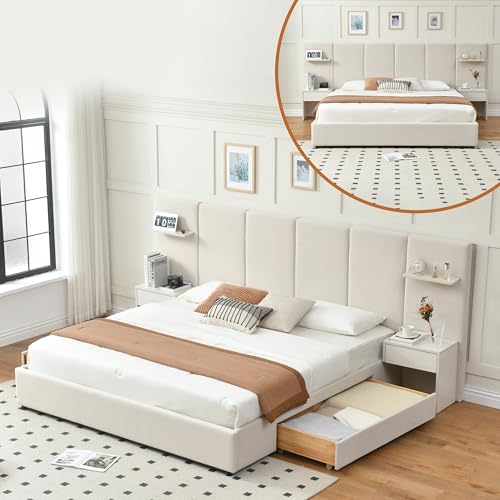
Nightstand Size for King Bed: The Ultimate Dimension Guide
A king-size bed is the centerpiece of a master bedroom, offering expansive space for rest and relaxation. But when it comes to choosing the right nightstand, size matters more than you might think. An incorrectly sized nightstand can make your bed feel unbalanced, disrupt your bedroom's flow, or simply fail to provide the functional surface you need. This comprehensive guide will walk you through every dimension you need to consider—height, width, and depth—to find the perfect nightstand size for your king bed.
Whether you're furnishing a new home or upgrading your current bedroom setup, understanding the relationship between your bed's dimensions and your bedside furniture is crucial. By the end of this article, you'll have the confidence to select nightstands that are both practical and aesthetically pleasing.
Quick Answer: For a standard king bed, the ideal nightstand height is typically between 24 to 28 inches, which should be roughly level with or slightly lower than your mattress top. The ideal width is generally 20 to 30 inches, and the depth should be 16 to 22 inches. However, these numbers can vary based on your bed frame, mattress height, and personal preference. Read on for a detailed breakdown.
Why Nightstand Size Matters for a King Bed
A king bed is substantial—typically 76 inches wide and 80 inches long. This scale demands bedside furniture that can visually hold its own without overpowering the space. A nightstand that's too small will look lost and may not be able to accommodate your essentials like a lamp, a book, or a glass of water. Conversely, a nightstand that's too large can crowd the bed and make navigating the room difficult.
Beyond aesthetics, the right size ensures functionality. You want to be able to reach your nightstand comfortably from bed, have enough surface area for your belongings, and maintain safe clearance for walking around the room. If you're also considering the overall layout, you might find our guide on nightstand placement and spacing helpful for optimizing your bedroom's traffic flow.
Key Dimensions to Consider
When evaluating nightstand size, you need to think in three dimensions: height, width, and depth. Each plays a distinct role in both form and function.
1. Height: The Most Critical Dimension
The height of your nightstand is arguably the most important factor. Ideally, the top of your nightstand should be at the same height as your mattress, or within 1–2 inches of it. This makes it easy to reach for items without straining or knocking things over. For a king bed, mattress heights can vary significantly. A low-profile mattress might sit 18 inches off the floor, while a thick pillow-top mattress on a high bed frame could be 30 inches or more.
To find your ideal nightstand height, measure from the floor to the top of your mattress. If your mattress top is 26 inches high, look for a nightstand around 24–28 inches tall. If your bed is exceptionally high, you may need a tall side table or a tall side table with storage to match. Conversely, if your bed is lower, a standard or even slightly shorter nightstand will work well. You can also explore options like a small side table that can be adjusted, though for a king bed, you'll likely want something more substantial.
2. Width: Finding the Right Balance
The width of your nightstand should complement the width of your king bed. A common rule of thumb is that the nightstand should be roughly one-third to one-half the width of the bed, but this is a loose guideline. For a king bed (76 inches wide), a nightstand between 20 and 30 inches wide is generally ideal. This provides ample surface area without making the bed look cramped.
If you have a very large bedroom, you can opt for wider nightstands, perhaps even a large end table with storage that offers drawers and shelves. In smaller rooms, a narrower option like a narrow end table with drawer or a thin side table with drawers can save space while still providing functionality. The key is to ensure there's enough space between the nightstand and the bed for comfortable access, and enough space on the other side for the nightstand to not feel squished against a wall.
3. Depth: Ensuring Usability
Depth refers to how far the nightstand extends from the wall. For a king bed, a depth of 16 to 22 inches is typical. This provides enough surface for a lamp, a clock, and a few personal items without protruding too far into the walking path. If you have a floating nightstand set, depth is often less of a concern as they are wall-mounted, but you still want enough surface area for your needs.
Consider what you plan to place on your nightstand. A large table lamp might require a deeper surface. If you like to keep a stack of books or a tablet, a deeper nightstand is beneficial. For those who prefer a minimalist look, a shallower depth can work, but always prioritize stability—a top-heavy lamp on a shallow nightstand can be a tipping hazard.
Standard Nightstand Size Ranges for King Beds
To give you a practical starting point, here is a table summarizing the recommended dimensions for nightstands paired with a king bed:
| Dimension | Recommended Range | Notes |
|---|---|---|
| Height | 24–28 inches | Should be level with or slightly below mattress top. |
| Width | 20–30 inches | One-third to one-half the bed's width is a good guide. |
| Depth | 16–22 inches | Enough for a lamp and essentials without blocking walkways. |
These ranges are flexible. Your personal style, the size of your bedroom, and the specific items you need to store will influence your final choice. For instance, if you need extra storage, you might look for a tall side table with drawers or a wood side table with storage that fits within these dimensions but offers more organizational capacity.
How to Measure Your Space and Bed
Before you shop, grab a measuring tape and follow these steps to determine the perfect nightstand size for your king bed:
- Measure Mattress Height: Measure from the floor to the top of your mattress. This is your target nightstand height. If you have a bed skirt or a thick mattress topper, include that in your measurement.
- Measure Available Width: Measure the space from the side of your bed to the nearest wall or obstruction (like a closet door or dresser). Subtract at least 2–3 inches for breathing room. This tells you the maximum width your nightstand can be.
- Measure Available Depth: Measure from the wall behind the nightstand to the front edge of where you want the nightstand to sit. Ensure you leave enough clearance for walking. A minimum of 24–30 inches of walkway is recommended.
- Consider Your Bed Frame: If you have a bed with an integrated headboard and storage, like a bed with nightstands built-in, you may not need separate nightstands. However, if you have a standard bed frame and nightstand set, measuring is essential.
If your space is tight, you might consider a floating nightstand set of 2 to save floor space, or a small end table with storage that still provides essential surface area. For those with a queen bed looking to upgrade, our guide on queen bed with bedside tables offers similar principles.
Style Considerations for King Bed Nightstands
Once you have your dimensions, you can focus on style. The right nightstand should harmonize with your bedroom's aesthetic. Here are a few popular styles and how they fit with a king bed:
Modern and Minimalist
Clean lines and unadorned surfaces work well with a king bed, especially in contemporary bedrooms. A small mid-century side table or a mid-century side table round can add a touch of retro flair while maintaining a sleek profile. For a truly modern look, consider a glass and brass bedside table or a chrome side table with drawer.
Rustic and Natural
Wood tones bring warmth and texture. A small natural wood side table or a wood side table for bedroom can beautifully complement a wooden king bed frame. For a more textured look, a rattan end table with storage or a wicker end table with storage adds a breezy, organic feel.
Classic and Elegant
Traditional bedrooms often feature rich woods and refined details. A cherry end table with storage or a mahogany nightstand set of 2 exudes timeless sophistication. A marble top round accent table or a white and gold bedside table can also add a touch of luxury.
Functional and Smart
For the tech-savvy, a charging nightstand set of 2 or a side table with power station keeps your devices charged and within reach. If you love to read in bed, a bedside table with book shelf or a bedside shelf attached to bed can be a game-changer. And for those who enjoy a nightcap, a bedside carafe and glass set is a thoughtful addition.
Common Mistakes to Avoid
Even with the right measurements, it's easy to make a misstep. Here are a few common mistakes to avoid when choosing nightstands for a king bed:
- Ignoring Mattress Height: Buying a nightstand that is too short or too tall can cause back strain and look awkward. Always measure first.
- Sacrificing Walkway Space: A nightstand that protrudes too far into the room can make your bedroom feel cramped and cause you to bump into it. Prioritize clear pathways.
- Overlooking Storage Needs: If you need to store items like books, medications, or electronics, a nightstand with drawers or shelves is essential. A square side table with drawer or a round side table with drawer can provide hidden storage.
- Mismatching the Set: If you have a dresser and 2 nightstand set or a black night stand and dresser, ensure the nightstand dimensions are proportionate to the bed and the dresser.
Final Thoughts
Choosing the right nightstand size for your king bed is a balance of aesthetics, functionality, and spatial awareness. By focusing on height, width, and depth—and considering your personal style and storage needs—you can create a bedside setup that enhances both your bedroom's look and your daily routine. Remember, the ideal nightstand is one that feels like a natural extension of your bed, offering convenience and beauty in equal measure.
Ready to find your perfect match? Explore our recommended nightstands below, curated to fit a variety of king bed setups.