
Grey Nightstand Guide: Styles, Materials & Buying Tips
Everything you need to choose a grey bedside table that fits your room, your storage needs and your budget — plus styling ideas that make grey feel warm, not cold.
SEE TOP GREY PICKSGrey is one of the most practical finishes you can choose for a bedside table. It hides everyday dust better than white, feels softer than black, and sits comfortably between warm and cool palettes. That flexibility is exactly why grey nightstands appear in so many bedrooms — and also why they can be tricky to buy. Not every grey is the same, and the wrong undertone or scale can make a well-designed room feel flat. This guide walks you through shades, materials, sizing, storage and styling so you can buy once and buy right.
Why Choose a Grey Nightstand
Grey works because it is a neutral with personality. Unlike beige, which can read as dated in the wrong context, grey adapts to both contemporary bedside styling and more traditional rooms without fighting the rest of your furniture. It also pairs naturally with almost every bedding colour, from crisp white linen to deep navy or warm terracotta.
There is a practical side too. Mid-tone and darker greys mask dust, fingerprints and minor scuffs far better than white or light wood finishes, which matters for a surface you touch every day. If you are still weighing options across the wider category, our comparison of open versus closed nightstand storage explains how finish and function interact.
One caveat: grey can feel cold if it is the only cool element in a warm room. The fix is simple — balance it with wood, brass, woven textures or warm lighting. A grey nightstand with a warm wood top, for example, reads far more inviting than an all-grey lacquer box.
Grey Shades and Undertones
Before you shop, decide on the undertone. This single choice affects how the nightstand looks against your walls, floor and bedding. There are four broad families worth knowing.
Light Grey / Dove
Airy and calm. Best for small bedrooms, dark corners and rooms with white or pale walls. Reflects light well.
Greige / Warm Grey
A grey-beige blend. The safest choice for wood floors, beige textiles and warm neutral bedrooms.
Slate / Blue-Grey
Cool and slightly moody. Works beautifully with white walls, metal accents and coastal or Nordic schemes.
Charcoal / Graphite
Bold and grounding. Ideal for larger rooms and as a contrast against light bedding or pale walls.
A quick test: hold a paint chip or fabric swatch of the nightstand colour against your wall in both daylight and evening light. Grey shifts noticeably between the two, and a shade that looks perfect at noon can turn muddy under warm bulbs. If you are choosing a cool blue-grey, cool-toned metals such as brushed nickel or chrome harmonise best; warm greige tones pair more naturally with brass and bronze, which you can see in our guide to antique brass table lamps.
Types of Grey Nightstands
Once the shade is settled, the next decision is form. Most grey nightstands on the market fall into a handful of recognisable types, each suited to different rooms and habits.
Grey Nightstand with Drawers
The classic choice for hiding clutter — chargers, medication, reading glasses and anything you do not want on display. One or two drawers cover most needs; three drawers suit larger rooms. See our full guide to a bedside table with drawers for layout advice.
$120–$650Grey Floating Nightstand
Wall-mounted and space-saving, ideal for small bedrooms or a minimalist look. Floating designs leave the floor clear, which makes a compact room feel larger. Compare pros and cons in floating vs standing nightstand.
$70–$400Grey Open-Shelf Nightstand
A mix of open shelf and drawer, or fully open. Great for display and quick access, less good at hiding mess. Pair with a bedside table tray to keep small items contained.
$90–$450Grey Upholstered Nightstand
Fabric-wrapped in grey linen or velvet. Adds softness and acoustic warmth, and works well beside an upholstered bed. Less practical for spills, so keep drinks on a coaster.
$180–$700Grey Smart Nightstand
Built-in USB ports, wireless charging or an integrated light. Excellent for tech-heavy bedside routines. See our picks for a small nightstand with charging station.
$150–$600Grey Tall / Narrow Nightstand
For tight gaps beside a large bed, a tall slim profile keeps storage without crowding. Height is critical here — check our notes on whether a nightstand should be taller than the bed.
$100–$500Materials and Finish Quality
Grey is a finish, not a material, so the surface underneath determines how it ages. Four options dominate the market.
Solid wood with a grey stain or paint. The most durable option. A grey-stained oak or ash nightstand shows the grain through the finish, which keeps it from looking flat. If you want to understand how the finish is protected, our wood sealant guide covers topcoats and re-oiling. Expect to pay more, but these pieces can last decades and can be refinished later.
Engineered wood with a grey laminate or veneer. The most common mid-market choice. Modern veneers look convincing, but check the edges — thin laminate can chip and, once chipped, the grey surface cannot be sanded out. Our comparison of solid wood versus veneer nightstands explains how to spot the difference in person.
Painted MDF. Smooth and affordable, with a very uniform grey. It resists warping but dents rather than flexes, and repairs are difficult. Best for guest rooms and low-traffic bedrooms.
Metal and glass. Grey powder-coated steel or aluminium gives an industrial look and is extremely easy to wipe clean. Grey glass tops add a sleek accent but show smudges quickly. If you like this direction, browse highest rated nightstands for well-reviewed examples.
Sizing and Height Rules
Grey or not, a nightstand only works if it fits the space and sits at the right height. These are the practical numbers to work from.
| Measurement | Typical Range | Notes |
|---|---|---|
| Height | 24–28 inches | Top should sit level with or slightly below the mattress top. See average height of a bedside table. |
| Width | 18–24 inches | For a queen bed, 20–24 inches is comfortable. Check how wide a nightstand should be for a queen bed. |
| Depth | 15–20 inches | Deeper pieces hold lamps and books; shallow pieces suit tight walkways. |
| Gap to bed | 2–4 inches | Close enough to reach, far enough to avoid knocking. |
| Drawer interior height | 4–6 inches | Enough for books, chargers and a tablet. Below 4 inches is limiting. |
Measure your mattress top before you shop, not the bed frame. Mattress heights vary widely, and this is the number that determines whether your grey nightstand will feel correctly proportioned. If you are unsure whether yours sits too low, read can a nightstand be lower than the bed. For very tight spaces beside a large bed, a thin bedside table or a small floating nightstand with drawer can solve a layout problem without sacrificing storage.
Styling a Grey Bedside Table
Grey responds well to contrast and texture. The goal is to stop it reading as a flat block of colour by layering warm or reflective elements on top.
- Add one warm material. A wood tray, woven basket or linen runner immediately warms a cool grey surface.
- Use a lamp with presence. A ceramic table lamp or a glass table lamp adds shape and light without competing on colour.
- Vary heights. Lamp tall, stack of books low, small dish flat — three tiers stop the surface looking static.
- Keep the palette to three. Grey plus one warm tone plus one accent is usually enough.
- Consider symmetry. Two matching grey nightstands flanking the bed feel calm and hotel-like. Our classic bedside styling guide covers symmetrical layouts.
- Leave breathing room. Resist filling every inch. A nightstand that is 60–70 percent styled looks intentional.
If your bedroom leans minimal, a Nordic bedside styling approach suits grey particularly well — pale walls, natural wood, a single lamp and a small plant. For something more layered and personal, explore eclectic bedside styling and mix in a bed lamp or a set of bedroom lamps for a coordinated look. A bedside table tray is the single most useful accessory for keeping a grey surface tidy.
What Grey Nightstands Cost
Prices vary mainly by material and construction, not by colour. Current market expectations for a single grey nightstand:
$80–$200. Laminate and particleboard, flat-packed, often with a single drawer. Fine for guest rooms and first apartments. Look for metal drawer runners rather than plastic.
$250–$600. The sweet spot. Solid wood or quality veneer, dovetail or well-fitted drawer joints, smooth grey paint or stain, sometimes with USB charging built in. This tier is where a grey nightstand starts to feel like furniture rather than a kit.
$700–$1,500+. Designer and solid hardwood pieces, often with hand-finished grey stain, soft-close hardware or an integrated lighting element.
Buying a pair usually saves 10–20 percent compared with buying two singles, and matching sets are common. If you are furnishing a whole room, it is often worth pairing the nightstand with a matching dresser — see our nightstand vs dresser comparison for how to plan the two together. Second-hand grey pieces can be excellent value because the neutral finish rarely dates; our secondhand nightstand buying guide covers what to inspect.
Common Buying Mistakes
Most grey nightstand regrets come down to one of these issues.
- Buying the wrong undertone. A cool blue-grey against warm beige walls can look dirty rather than deliberate. Always check the swatch in your actual room lighting.
- Ignoring the mattress height. A nightstand that is four inches too low forces you to reach down every night. Measure before you buy.
- Overestimating drawer space. Slim drawers that look generous online often hold very little. Check internal dimensions, not exterior ones.
- Choosing laminate for a high-use bedroom. Chipped grey laminate cannot be sanded or touched up. If the nightstand will see daily use, solid wood or veneer lasts far longer.
- Skipping the anti-tip strap. Freestanding nightstands in homes with children or pets should always be anchored. This is a safety issue, not a preference.
- Buying one when you need two. Matching pairs sell out, and a later second purchase may not match the dye lot exactly.
- Forgetting cable access. If you charge devices at the bedside, confirm there is a gap or grommet for cables, or plan a bedroom nightstand with charging station.
Care and Maintenance
Grey finishes are forgiving but not indestructible. Painted and laminate surfaces should be wiped with a soft, slightly damp cloth and dried immediately — standing water is the main cause of clouding and edge swelling. Avoid abrasive cleaners and alcohol-based sprays, which can dull a painted grey and leave streaks.
Grey-stained wood benefits from an occasional re-oil or wax, which keeps the colour even and prevents dry patches. Our wood sealant guide explains how to choose a compatible product. For sticky marks left by tape or labels, the technique in nightstand sticky residue removal works without damaging the finish. Felt pads under the legs protect both the nightstand and your floor, and a coaster under any drink prevents water rings that are especially visible on mid-tone grey.
Recommended Grey Nightstands
⚠️ AFFILIATE DISCLOSURE: This website contains affiliate links. As an affiliate Associate, we earn from qualifying purchases. If you make a purchase through these links, we may receive a small commission at no additional cost to you. Read our full affiliate policy.

BOLUO Gray Nightstand with Charging Station, LED Night Stand with 2 Fabric Drawers, Bedside Table with USB Ports and Outlets, Nightstand for Bedroom Modern
Check price on Amazon
Huuger Night Stand with Charger Station, USB-C Port, End Table | 2 Fabric Drawer Nightstand with Open Shelf, Bedside Table, Compact Size for Small Spaces, X Shaped Side Rail,Grey
Check price on Amazon
VASAGLE Farmhouse Nightstands with Charging Station, 1 Drawer, Set of 2 | Bedside Table, Side Table with Open Compartment, for Bedroom, Misty Gray, LIRY Collection ULET859G01, Set of 2
Check price on Amazon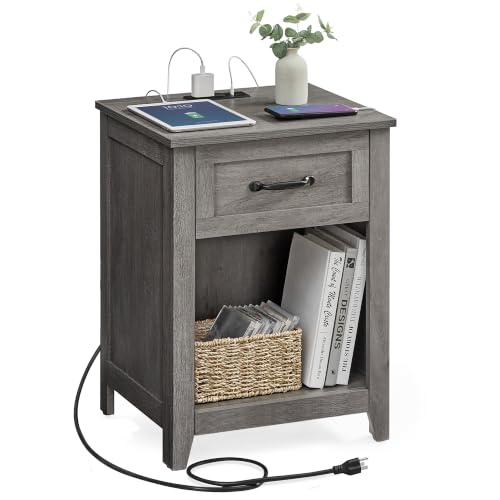
VASAGLE Farmhouse Nightstand with Charging Station, 1 Drawer | End Table with Storage Drawer, Bedroom Furniture, 17.7 x 15.7 x 23.6 Inches, Misty Gray, LIRY Collection ULET659G68
Check price on Amazon
sthmec Nightstand with Charging Station, LED Night Stand Set of 2, Bedside Table End Table with Drawer, Bedroom Tables with 2 Fabric Drawers, 3-Tier Storage Side Table for Bedroom,Grey
Check price on Amazon
OneBlis Nightstands Set 2, 15 Inches LED Night Stand Set of 2, Modern Bedside Table with LED Lights, High Gloss Surface, End Table with Storage for Bedroom, Grey
Check price on Amazon
VASAGLE 23.6 Nightstands, LED Lights, Charging Station, 2 Drawers | Bedside Table, End Table for Bedroom, 23.6 x 13.8 x 24.1 inch, Misty Gray, CUSTOS Collection ULET639GW01S
Check price on AmazonFrequently Asked Questions
What is the best shade of grey for a nightstand?
Light greys such as dove and fog feel airy and work well in small or dark bedrooms, while charcoal and slate add depth in larger rooms. Warm greige tones pair best with wood floors and beige textiles, whereas cool blue-greys suit white walls and metal accents.
Is a grey nightstand hard to style?
No. Grey is a neutral, so it blends with almost any bedding colour. Add warmth with wood or brass accents, soft textiles and one or two personal objects to keep the bedside from looking flat.
How much should I pay for a grey nightstand?
Particleboard and laminate grey nightstands typically cost $80 to $200. Mid-range solid wood or veneer pieces run $250 to $600, and designer or solid hardwood models can exceed $900.
Should a grey nightstand match the bed frame?
Matching is optional. A grey nightstand can contrast a wood or upholstered bed or harmonise with a grey headboard. Repeating one other grey element, such as a rug or lamp base, ties the room together.
Do grey nightstands show dust?
Mid-tone and dark greys hide dust far better than white or light wood. Light dove grey shows dust slightly more, but regular wiping with a microfibre cloth keeps it looking clean.
Can a grey nightstand work in a small bedroom?
Yes, particularly a wall-mounted floating design or a narrow tall piece. Light greys also help a small room feel more open because they reflect light rather than absorbing it.