Full Size Bed with Nightstand: The Complete Buyer's Guide
Everything you need to know about pairing a full size bed with the right nightstand — sizing, placement, styles, storage, and how to build a balanced bedside setup that actually fits your room.
SEE RECOMMENDED SETS
Quick Answer: A full size bed measures 54 inches wide by 75 inches long. For a balanced bedside setup, pair it with a nightstand that is 18 to 24 inches wide and 24 to 28 inches tall — roughly level with or just below the mattress top. In most rooms, a full bed comfortably fits two nightstands if you maintain at least 24 inches of walkway clearance on each side.
Recommended Full Size Bed with Nightstand Sets
⚠️ AFFILIATE DISCLOSURE: This website contains affiliate links. As an affiliate Associate, we earn from qualifying purchases. If you make a purchase through these links, we may receive a small commission at no additional cost to you.
Read our full affiliate policy.

AMERLIFE 3-Piece Modern Fluted Full Bedroom Furniture Set, Black | Wood Full Size Bed Frame, Headboard & Footboard, Storage Night Stand Set of 2, Wooden Bedframe & Nightstand Sets
Check price on Amazon
⚠️ Note: The purchase links above are affiliate links. As an Amazon Associate, we earn from qualifying purchases at no additional cost to you.

Furnulem Full Size Bed Frame with Headboard & 2 Fabric Drawers, Black Oak | Full Platform Bed Featuring LED Lights, Built-in Charging Station & 3-Tier Storage Shelves, Metal Slats, No Box Spring Needed
Check price on Amazon
⚠️ Note: The purchase links above are affiliate links. As an Amazon Associate, we earn from qualifying purchases at no additional cost to you.

AMERLIFE 3-Piece Modern Fluted Full Bedroom Furniture Set, Natural Oak | Wood Full Size Bed Frame, Headboard & Footboard, Storage Night Stand Set of 2, Wooden Bedframe & Nightstand Sets
Check price on Amazon
⚠️ Note: The purchase links above are affiliate links. As an Amazon Associate, we earn from qualifying purchases at no additional cost to you.

KISLOT 3-Piece Bedroom Set, Bed Frame & 2 Nightstands, Natural, Full | Wood Platform Bed, Storage Nightstand, Type-C Charging Port, Farmhouse Furniture
Check price on Amazon
⚠️ Note: The purchase links above are affiliate links. As an Amazon Associate, we earn from qualifying purchases at no additional cost to you.

LUXOAK 3 Pcs Bedroom Furniture Sets,Includes Farmhouse Full Size Bed Frame with 49" Tall Headboard and Nightstand Sets of 2 with Charging Station, Slated Handles & Stainless Steel Feet, Rustic Grey
Check price on Amazon
⚠️ Note: The purchase links above are affiliate links. As an Amazon Associate, we earn from qualifying purchases at no additional cost to you.
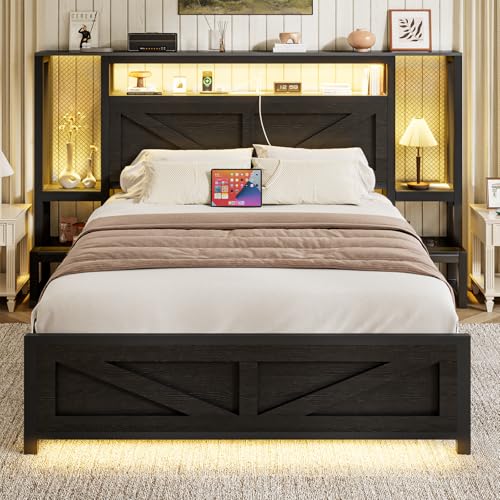
Otevehde Full Size Rustic Bed Frame with Storage Born Door Headboard and Bedside Storage, Industrial Farmhouse Metal Platform Bed Frame with Charging Station and LED Lights, Black
Check price on Amazon
⚠️ Note: The purchase links above are affiliate links. As an Amazon Associate, we earn from qualifying purchases at no additional cost to you.

SHA CERLIN Full Size Bed Frame, Velvet Upholstered Platform Bed, White | Vertical Channel Tufted Adjustable Headboard, Low Profile Bed Frame, No Box Spring Needed, Easy Assembly
Check price on Amazon
⚠️ Note: The purchase links above are affiliate links. As an Amazon Associate, we earn from qualifying purchases at no additional cost to you.

VIAGDO Full Size Bed Frame with Bookcase Headboard, Wooden Bed Frame Full Size with Charging Station, 4 Storage Drawers and LED Lights, with Type-C and USB, No Box Spring Needed, Black
Check price on Amazon
⚠️ Note: The purchase links above are affiliate links. As an Amazon Associate, we earn from qualifying purchases at no additional cost to you.
Why the Full Size Bed and Nightstand Pairing Matters
A full size bed — often called a double bed — is the smallest mattress size designed to sleep two adults. At 54 inches wide and 75 inches long, it occupies noticeably less floor space than a queen, which makes it a popular choice for guest rooms, teen bedrooms, apartments, and smaller primary bedrooms. But that compact footprint creates a specific design challenge: how do you fit functional bedside storage without making the room feel cramped?
The answer usually comes down to choosing a nightstand with the right proportions. A nightstand that is too wide or too tall will crowd the bed and block walkways. A nightstand that is too small will look out of scale and offer little practical storage. Getting the pairing right is what separates a bedroom that feels intentional from one that feels like furniture was simply dropped into place.
If you are still deciding between mattress sizes, it helps to understand how a full bed compares to the next size up. Many buyers who want more breathing room for two sleepers eventually move toward a queen bed with bedside tables, while those who want maximum floor space often explore beds with nightstands built in as an all-in-one solution.
Full Size vs. Queen: A Quick Comparison
| Feature |
Full Size Bed |
Queen Size Bed |
| Dimensions |
54" × 75" |
60" × 80" |
| Best for |
Guest rooms, teens, smaller bedrooms |
Primary bedrooms, couples |
| Ideal nightstand width |
18"–24" |
20"–28" |
| Typical nightstand height |
24"–28" |
24"–28" |
| Two nightstands possible? |
Yes, with 24"+ clearance each side |
Yes, more easily |
How to Size a Nightstand for a Full Size Bed
Nightstand sizing comes down to three measurements: height, width, and depth. Each one affects how the piece looks and how usable it feels next to a full bed.
Height: The Most Important Measurement
The general rule is that the top of your nightstand should sit level with the top of your mattress, or within 1–2 inches of it. For most full size beds, a standard mattress and box spring assembly puts the mattress surface at roughly 24 to 28 inches off the floor. That means your nightstand should fall in that same range.
If your full bed is on a low platform frame, your mattress may sit closer to 20 inches. In that case, look for a lower nightstand or a tall side table with storage that can be adjusted. Many people find that a tall side table for bedroom actually works well with platform beds because the added height compensates for the low frame.
A nightstand that is too tall forces you to reach up while lying in bed, which is uncomfortable for reading or setting down a glass of water. A nightstand that is too short forces you to reach down, which is equally awkward.
Width: Matching the Bed's Proportion
A full size bed is 54 inches wide. A nightstand that is 18 to 24 inches wide creates a pleasing visual balance. If you are using two nightstands, the combined width of both should not exceed the width of the bed itself — otherwise the bedside area will feel bottom-heavy.
For very tight spaces, a narrow end table with drawer can provide storage without overwhelming the room. A thin side table with drawers is another option that keeps the footprint minimal while still offering a place for essentials.
Depth: Protecting Your Walkway
Nightstand depth typically ranges from 15 to 20 inches. Deeper nightstands offer more storage but eat into your walkway. In a small bedroom with a full bed, depth matters as much as width. Measure the distance from the side of your bed to the nearest wall or door. You need at least 24 inches of clearance to walk comfortably, and ideally 30 inches.
Pro tip: Use painter's tape to mark out the footprint of a nightstand on your floor before buying. This low-cost trick prevents the most common furniture-buying mistake — discovering the piece is too big after it arrives.
Should a Full Size Bed Have One or Two Nightstands?
This is one of the most common questions from full bed owners, and the answer depends entirely on your room layout and how you use the bed.
When Two Nightstands Work
Two nightstands create visual symmetry and give both sleepers their own space for a lamp, phone, book, and water glass. They work well when:
- The room is at least 10 feet wide
- There is at least 24 inches of clearance on both sides of the bed
- The bed is centered on a wall rather than pushed into a corner
If symmetry matters to you, a floating nightstand set of 2 creates a clean, matched look without consuming floor space. For a more traditional feel, a vintage nightstands set of 2 or an espresso nightstand set of 2 delivers that coordinated bedroom aesthetic.
When One Nightstand Is the Better Choice
One nightstand is often the smarter choice in smaller rooms or when the bed sits in a corner. In this setup, place the nightstand on the side you use most — usually the side closest to the door or the side you sleep on. A small end table with storage can fill that role without dominating the space.
Asymmetry is not a flaw. A single well-chosen nightstand paired with a wall-mounted reading light or a small shelf can look deliberate and stylish rather than incomplete.
All-in-One Alternatives
If you would rather not buy separate pieces, consider a bed that integrates storage directly. A bed with nightstands built in eliminates the need for separate tables entirely. Similarly, a bed frame and nightstand set or a bed with side storage drawers solves the bedside storage problem in a single purchase.
Nightstand Styles That Pair Well with a Full Size Bed
The style of your nightstand should complement your bed frame and the overall design of your bedroom. Here are the most popular directions for full bed owners.
Modern and Minimalist
Clean lines, flat fronts, and no visible hardware define the modern look. A black side table with drawer or a small round black side table keeps the bedside area streamlined. If you prefer a lighter palette, a small white round side table or bedside tables in white and wood add brightness without clutter.
Mid-Century and Retro
Tapered legs, warm wood tones, and subtle curves give mid-century nightstands a timeless appeal. A small mid-century side table or a mid-century round side table pairs beautifully with a full bed in a wood frame. For a warmer tone, a mid-century walnut end table adds richness.
Natural and Organic
Wood, rattan, and woven materials bring texture and warmth. A small natural wood side table or a wood side table with storage works well in rooms with natural light. For a softer look, a rattan end table with storage or a woven side table with storage introduces an organic feel that works especially well in coastal and boho bedrooms.
Glam and Statement
If you want the nightstand to be a focal point, consider a glass and brass bedside table or a white and gold bedside table. A marble top round accent table adds a touch of luxury without visual weight.
Industrial and Metal
Metal nightstands suit full beds in loft-style or modern farmhouse bedrooms. A narrow black metal side table or a small wrought iron end table brings an industrial edge while staying compact.
Storage Options for a Full Bed Nightstand
Because a full bed takes up less room than a queen, the nightstand often has to work harder as a storage piece. Here is how the main storage configurations compare.
Single Drawer
A single drawer nightstand is the most common choice for full beds. It offers a concealed space for medications, charging cables, or personal items while keeping the top surface free for a lamp and a book. A square side table with drawer or a round side table with drawer are classic single-drawer options.
Multiple Drawers
If you need more concealed storage, a tall side table with drawers or a tall side table with storage provides vertical capacity without increasing the footprint. This is especially useful in a small bedroom where every inch of floor space counts.
Open Shelves
Open shelves are ideal for displaying books, decor, or a bedside carafe and glass set. A bedside table with book shelf keeps reading material visible and accessible. Open designs also make small rooms feel less heavy.
Locking and Specialty Storage
For shared or guest rooms, an end table with locking drawer provides security for valuables. A drum side table with storage hides items behind a removable lid, which is a smart choice for rooms where you want a clean surface with hidden capacity.
Layout and Placement Tips for a Full Bed and Nightstand
How you position your bed and nightstand affects both function and flow. These guidelines apply to most full size bed setups.
Center the Bed When Possible
Centering the bed on the main wall creates room for two nightstands and makes the space feel balanced. Leave at least 24 inches between the bed and each side wall. If centering is not possible, push the bed into a corner and use a single nightstand on the open side.
Leave Breathing Room Around the Nightstand
Do not push the nightstand tightly against the wall if it has drawers. You need 2 to 3 inches of clearance behind it for the drawer to open fully and for cables to pass through. This is especially important for nightstands with charging features or a side table with power station.
Coordinate with Bedside Lighting
Your nightstand and lighting should work as a pair. A table lamp should be no more than 1.5 times the height of the nightstand, or the light will feel top-heavy. A table lamp with reading light is a practical choice for full bed owners who read in bed. If you prefer no table lamp at all, a bedside light with USB ports mounted on the wall frees up the entire nightstand surface.
For sizing guidance, our notes on the proper size for bedside lamps explain how to match lamp scale to nightstand height.
Small Room Solutions
In a genuinely small bedroom, a small side table for nursery or a small end table for bedroom keeps the footprint tight. A portable bed table for laptop is another option for people who need a surface that can be moved out of the way. If you need a compact desk area as well, a small study table for bedroom can double as a bedside surface during the day.
Materials: What to Look For
The material of your nightstand affects durability, maintenance, and how it ages alongside your full bed.
Solid Wood
Solid wood nightstands are the most durable and can be refinished if damaged. A wood end table with storage or a wood side table for bedroom in oak, maple, or walnut will last for decades. Cherry and mahogany are warmer options — a cherry end table with storage or a mahogany nightstand set of 2 brings a traditional, formal feel.
Engineered Wood
Engineered wood is more affordable and resistant to warping, which makes it a practical choice for humid rooms. It cannot be refinished, but it holds up well under normal use.
Metal and Glass
Metal frames are strong and easy to clean. A chrome side table with drawer or a black and gold nesting table adds a modern accent. Glass tops require more frequent cleaning but resist stains and scratches better than wood.
Wicker, Rattan, and Woven
These materials are lightweight and bring texture. A wicker end table with storage or a small white wicker side table works well in casual and coastal bedrooms. They are less durable than wood or metal, so they suit low-traffic guest rooms better than heavy daily use.
Full Bed and Nightstand Setups by Room Type
Guest Room
Guest rooms benefit from a matched set that looks pulled together without much effort. A dresser and 2 nightstand set or a queen bed and nightstand set (if you have room for a larger bed) creates a hotel-like feel. For a full bed in a guest room, a charging nightstand set of 2 adds convenience for visitors.
Teen Bedroom
Teens need storage for devices, books, and personal items. A brown side table with storage or a green side table with storage adds color and function. A nightstand with built-in USB charging, such as a bedside lamp with USB charger, reduces cable clutter.
Small Primary Bedroom
When a full bed is the primary bed, every piece needs to earn its place. A black night stand and dresser pairing keeps the palette cohesive and maximizes storage in one visual zone. A double-sided chest of drawers can serve as both a dresser and a bedside surface if placed beside the bed.
Nursery and Kids Room
A full bed in a nursery or child's room often doubles as a guest bed or a transition bed. A small side table for nursery keeps essentials within reach of a rocking chair or bed. A side table for nursery rocker is sized specifically for that use.
Full Size Bed with Nightstand: Buying Checklist
Before you buy, run through this checklist to avoid the most common mistakes.
- Measure your mattress height. This determines the ideal nightstand height. Do not guess.
- Measure your wall space. Confirm how much room you have on each side of the bed. A narrow black metal side table or a thin side table with drawers may be necessary in tight spaces.
- Decide on one or two nightstands. If you have less than 24 inches of clearance on a side, skip that side.
- Choose a storage type. Drawers for concealment, open shelves for display, or a mix.
- Check the weight capacity. If you plan to place a lamp, books, and a laptop on the nightstand, make sure the top can handle it.
- Confirm assembly requirements. Some nightstands arrive fully assembled; others require significant assembly time.
- Plan for cable management. If you charge devices at the bedside, choose a nightstand with a cable cutout or open back.
Budget guidance: A quality full size bed frame with a matching nightstand typically costs between $400 and $1,200 for a mid-range set. Solid wood nightstands alone range from $150 to $600 each depending on the species and joinery. Budget-friendly options start around $80 per nightstand.
Frequently Asked Questions
What size nightstand fits a full size bed?
A nightstand between 18 to 24 inches wide and 24 to 28 inches tall pairs best with a full size bed. The nightstand top should sit level with or slightly below the mattress surface for comfortable access.
How many nightstands should a full size bed have?
A full size bed can accommodate two nightstands if the room allows at least 24 inches of clearance on both sides. In smaller rooms, a single nightstand or a wall-mounted design works well.
Can I use a full size bed with one nightstand?
Yes. Many full bed owners use one nightstand when space is limited, placing it on the side they use most. A wall-mounted or narrow design maximizes the available footprint.
Should the nightstand be taller or shorter than the bed?
The nightstand top should be approximately level with the mattress top, or within 1–2 inches. A nightstand that is significantly taller or shorter will feel awkward to use while lying in bed.
Is a full size bed big enough for two people?
A full size bed can sleep two adults, but it is tighter than a queen. It works best for couples who are comfortable with close sleeping quarters, or for single sleepers who want extra room. Many people who share a full bed eventually move to a queen for more space.
Final Thoughts
Pairing a full size bed with the right nightstand is about more than just buying furniture. It is about creating a bedside area that works for how you actually live — whether that means a single drawer for a book and a phone, or a full set of two matching nightstands with charging ports and drawers. Measure carefully, choose a style that complements your bed frame, and prioritize function over form when space is tight. Do those three things and your full bed setup will feel intentional, comfortable, and complete.