
Antique Nightstands: Timeless Charm for Your Bedroom
Explore the world of antique and vintage nightstands. From Victorian elegance to Art Deco glamour, discover how to identify, evaluate, and style authentic antique bedside tables that bring history and character to your home.
EXPLORE THE GUIDEWhy Antique Nightstands? An antique nightstand is more than just a piece of furniture—it's a piece of history. Unlike mass-produced modern pieces, antique and vintage nightstands carry the craftsmanship, patina, and stories of generations past. Whether you're a seasoned collector or a first-time buyer drawn to the warmth of aged wood, this guide will walk you through everything you need to know before investing in an antique bedside table.
What Makes a Nightstand "Antique"?
In the furniture world, the term "antique" has a specific meaning. While colloquially people use it to describe anything old, true antiques must be at least 100 years old. Pieces between 20 and 100 years old are technically considered "vintage." This distinction matters enormously for pricing, authenticity, and collectibility.
Antique nightstands typically originate from distinct historical periods, each with its own signature characteristics. Understanding these periods helps you identify what you're buying and assess whether the price is fair. The most sought-after antique nightstands come from the Victorian era (1837–1901), the Edwardian period (1901–1910), the Art Nouveau movement (1890–1910), and the Art Deco era (1920s–1930s).
Many buyers confuse antique nightstands with rustic nightstands or farmhouse nightstands, which mimic aged aesthetics but are often newly manufactured. If authenticity matters to you, always verify the age through construction techniques, joinery, and provenance.
A true antique nightstand will show uneven wear patterns, hand-cut dovetail joints, and signs of hand-planing on the wood surface. Machine-perfect uniformity is a red flag for modern reproductions.
Popular Antique Nightstand Styles
Antique nightstands span a wide range of design movements. Here are the most collectible styles you'll encounter in the market today:
Victorian (1837–1901)
Ornate carvings, dark woods like mahogany and walnut, marble tops, and elaborate hardware. Often feature a single drawer and a lower shelf.
Edwardian (1901–1910)
Lighter and more refined than Victorian. Satinwood, mahogany, and inlaid details. Elegant, restrained ornamentation.
Art Nouveau (1890–1910)
Flowing, organic lines inspired by nature. Curved forms, botanical motifs, and a departure from rigid Victorian symmetry.
Art Deco (1920s–1930s)
Geometric shapes, exotic woods, lacquer finishes, and bold contrasts. Glamorous and modern for its time.
French Provincial
Hand-carved solid wood, often oak or walnut, with a warm, countrified elegance. Cabriole legs and scalloped aprons are common.
Arts & Crafts / Mission
Sturdy oak construction, straight lines, exposed joinery, and a rejection of ornate decoration. Functional and honest design.
Each style pairs differently with modern bedroom decor. A Victorian marble-top piece feels at home in a traditional setting, while Art Deco nightstands can add a touch of glamour to contemporary spaces. For those who prefer a softer antique look, cherry nightstands and walnut nightstands offer warmth that bridges old and new aesthetics.
Materials & Craftsmanship to Look For
The wood species and joinery techniques used in an antique nightstand tell you a great deal about its origin, durability, and value. Here's what to examine:
Solid Wood Species
- Mahogany: The hallmark of fine Victorian and Edwardian furniture. Rich reddish-brown color, tight grain, and excellent durability.
- Walnut: Prized for its deep chocolate tones and figured grain. Common in French Provincial and Art Deco pieces.
- Oak: The backbone of Arts & Crafts and Mission furniture. Dense, durable, and often quarter-sawn to reveal striking ray flecks.
- Satinwood: A lighter, golden wood favored in Edwardian and Sheraton-style pieces. Highly figured and prized by collectors.
- Rosewood: Exotic and dark, with dramatic grain patterns. Frequently used in Victorian and Art Deco nightstands.
Joinery & Construction Details
Hand-cut dovetail joints are the gold standard for antique drawer construction. Look for irregular, slightly uneven tails and pins—these indicate handwork. Machine-cut dovetails (perfectly uniform) suggest a later piece or a reproduction. Mortise-and-tenon joints, wooden dowels, and hand-forged nails are other hallmarks of authentic antique craftsmanship.
Drawer bottoms made from solid wood (not plywood) and secondary woods like pine or poplar (used for drawer sides and backs) are also strong indicators of age. For more on wood quality, see our guide to real wood nightstands and natural wood nightstands.
Flip the nightstand over. Old pieces often have hand-planing marks, uneven saw cuts, and a patina on the underside that can't be faked. Modern reproductions usually have uniform, machine-sanded surfaces.
Condition, Patina & Restoration
When evaluating an antique nightstand, condition is everything. However, "perfect condition" isn't always the goal—patina, the natural aging of wood and finish, is highly valued by collectors and adds character that new furniture simply cannot replicate.
What to Accept
- Minor surface wear: Light scratches, small dings, and softened edges are normal and often desirable.
- Original patina: The mellow, aged glow of old shellac or wax finishes should be preserved, not stripped.
- Historical repairs: Old repairs done with period-appropriate materials are acceptable and often add to the piece's story.
What to Avoid
- Structural damage: Cracked legs, broken joints, or warped drawer fronts can be expensive to fix.
- Heavy refinishing: A piece that's been stripped and refinished loses much of its antique value.
- Non-original hardware: Replaced knobs or pulls reduce authenticity unless they're period-correct.
- Water damage or wood rot: Especially common on pieces stored in damp environments.
If you're considering a restoration project, our guides on nightstand restaining and vintage nightstand restoration offer step-by-step advice. For lighter touch-ups, scratch touch-up techniques can preserve patina while improving appearance.
Never use commercial furniture polish containing silicone on antique wood. Silicone penetrates the finish and makes future restoration nearly impossible. Stick to beeswax-based products or a damp cloth.
Antique Nightstand Price Guide
Antique nightstand prices vary widely based on age, rarity, condition, and provenance. Here's a realistic overview of what you can expect to pay in today's market:
| Category | Price Range | What to Expect |
|---|---|---|
| Entry-Level Vintage (20–50 years) | $150–$400 | Mid-century and later vintage pieces, often in good usable condition |
| Mid-Range Antique (50–100 years) | $400–$1,200 | Art Deco, Edwardian, and French Provincial pieces with minor wear |
| Fine Antique (100+ years) | $1,200–$3,500 | Victorian, Art Nouveau, and high-quality Edwardian nightstands |
| Museum-Quality / Rare | $3,500–$10,000+ | Exceptional provenance, rare woods, signed pieces, pristine condition |
For those working with a tighter budget, cheap nightstands and vintage nightstands can offer antique charm at accessible prices. If you're drawn to the antique look but prefer new construction, burl wood nightstands and burl nightstands capture that old-world character with modern reliability.
Where to Find Authentic Antique Nightstands
Finding the right antique nightstand requires patience and knowing where to look. Here are the best sources:
1. Estate Sales & Auctions
Estate sales are goldmines for antique furniture. You'll often find well-preserved pieces at below-market prices, especially on the final day when sellers are motivated to clear inventory. Auction houses like Christie's and Sotheby's handle higher-end pieces, while local auctions offer more affordable options.
2. Antique Shops & Dealers
Reputable antique dealers provide authentication, provenance, and often restoration services. You'll pay a premium, but the expertise and guarantee are worth it for significant purchases. Look for dealers who specialize in specific periods or styles.
3. Online Marketplaces
Platforms like 1stDibs, Chairish, and Etsy offer curated antique nightstands with detailed descriptions and photos. eBay and Facebook Marketplace can yield bargains but require more caution. Always ask for additional photos, especially of joinery and drawer construction.
4. Flea Markets & Consignment Shops
For budget-conscious buyers, flea markets and consignment shops offer the thrill of the hunt. Arrive early, bring a flashlight and measuring tape, and be prepared to negotiate. You might find a diamond in the rough that, with a little care, becomes a stunning bedside piece.
If you're furnishing an entire bedroom, consider a nightstand set, matching nightstands, or a nightstand and dresser set to create visual cohesion. A bedroom dresser and nightstand set in antique style can anchor an entire room's design.
How to Style Antique Nightstands in Modern Bedrooms
One of the greatest joys of owning an antique nightstand is the contrast it creates in a modern space. Here's how to style yours like a designer:
Mix Eras, Not Chaos
Pair a Victorian nightstand with a minimalist platform bed for a curated, collected look. The key is balance—let the antique piece be the focal point and keep surrounding furniture clean and simple.
Lighting Matters
Antique nightstands often look best with soft, warm lighting. A bedside reading light with an aged brass or bronze finish complements period pieces beautifully. Avoid harsh modern LEDs that clash with the patina.
Accessorize Sparingly
Less is more with antiques. A single vintage book, a small ceramic vase, or a framed photograph is enough. Cluttering an antique surface obscures its craftsmanship and diminishes its impact.
Protect the Surface
Always use coasters or felt pads under lamps and decorative objects. Antique finishes are delicate and easily damaged by heat, moisture, and scratching. Our nightstand coasters guide and nightstand felt pads articles offer practical protection tips.
Consider Placement
Antique nightstands often have specific proportions—taller or deeper than modern counterparts. Check our nightstand placement guide to ensure proper spacing and ergonomics. If your antique piece is unusually tall, a tall bedside table or 30-inch tall nightstand might provide the proportion you need in a modern alternative.
Related Nightstand Styles You May Love
If antique nightstands appeal to you, these related styles may also fit your aesthetic:
Recommended Antique Nightstands
⚠️ AFFILIATE DISCLOSURE: This website contains affiliate links. As an affiliate Associate, we earn from qualifying purchases. If you make a purchase through these links, we may receive a small commission at no additional cost to you. Read our full affiliate policy.

Retro Set of 2 Nightstands with Carved Floral Drawer for Bedroom, Black | Farmhouse Wooden End Table with Open Shelf, Vintage Nigh Stand with Fluted Legs, Antique Accent Bedside Table with Storage
Check price on Amazon
JOINICE Vintage Nightstand Set of 2 with Charging Station, 3 Large Drawers | Antique End Table with Distressed Wood Grain Finish, Solid Wood Legs, Metal Handles, Suitable for Vintage & Modern Interiors
Check price on Amazon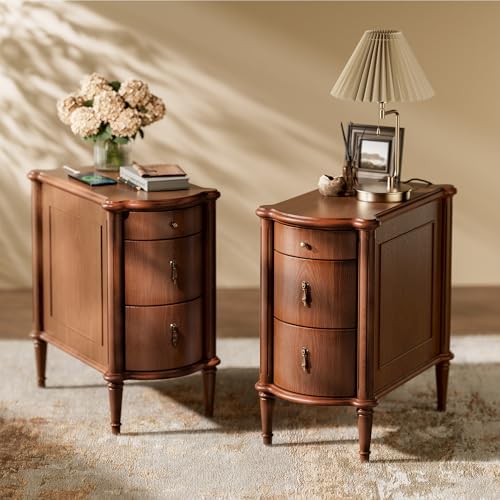
STO'SENSE Nightstand Set of 2 w/Charging Station & 3 Drawers, Pre-Assembled, Vintage Side Table w/Antique-Finished Pulls, Rustic Wood Finish, Narrow End Table w/Turned Legs for Bedroom, Brown
Check price on Amazon
STO'SENSE Wide Nightstand w/Charging Station & 2 Drawers, Pre-Assembled, Vintage Side Table w/Antique-Finished Pulls, Rustic Wood Finish, End Table w/Turned Legs for Bedroom,Black
Check price on Amazon
FUSUNBAO Set of 2 Nightstands with Charging Station&2 Fluted Drawers,Walnut | Vintage Bedside Table, 2 Fluted Drawers and Open Shelf, Rustic End Table, Power Outlet and USB Ports, For Bedroom
Check price on Amazon
Signature Design by Ashley Alisdair 2 Drawer Nightstand, Reddish Brown | 21.63 in wide, Louis Philippe-style moulding, Metal slides beneath drawers, Antiqued bronze-tone pulls, Master bedroom use
Check price on Amazon
AURELIA LEVEAUX Walnut Brown Nightstands Set of 2, 25" H, Drawer & Shelf | Two matching bedside tables with solid wood bobbin legs and brass-tone knobs bring warm, collected symmetry to the bedroom
Check price on AmazonFrequently Asked Questions About Antique Nightstands
How can I tell if a nightstand is truly antique?
Look for hand-cut dovetail joints, uneven hand-planing marks, period-appropriate hardware, and secondary woods like pine or poplar. True antiques are at least 100 years old. When in doubt, consult a professional appraiser or antique dealer.
Should I refinish an antique nightstand?
Generally, no. Refinishing destroys patina and significantly reduces value. Clean gently with a damp cloth and apply a beeswax-based polish. Only refinish if the existing finish is severely damaged and the piece has little collectible value.
Are antique nightstands safe to use daily?
Yes, with care. Avoid placing heavy items on delicate surfaces, use coasters, and handle drawers gently. Check for stability and repair any loose joints before use. Antique pieces were built to last and can handle daily use when treated respectfully.
What's the difference between antique and vintage nightstands?
Antique means 100+ years old. Vintage generally refers to pieces 20–100 years old. Both can be beautiful and valuable, but antiques typically command higher prices due to rarity and historical significance.
Where can I find affordable antique nightstands?
Estate sales, flea markets, consignment shops, and online marketplaces like eBay and Facebook Marketplace are your best bets. Auction houses often have lower-priced lots on weekdays or during off-season sales.
Ready to Bring Home a Piece of History?
Browse our curated selection of antique and vintage-style nightstands. Each piece is chosen for its craftsmanship, character, and ability to transform your bedroom into a timeless retreat.
SHOP ANTIQUE NIGHTSTANDS